


01
Internal use
Start with 1 teaspoon daily. If well tolerated, you can increase to 2 teaspoons per day.
Take it straight, mix it into honey, or add it to food once cooled.


Use the black seed, for it is a cure for every disease except death.
Prophet Muhammad ﷺ. Sahih al-Bukhari and Sahih Muslim
Thymoquinone is the compound behind most of what black seed does. The anti inflammatory, antioxidant, antimicrobial and immune activity all trace back to it, and the research shows more of it means a stronger oil.
Most black seed oil on the market sits under 1%. Ours is 2.9%, verified and printed on the label. A bottle that states no figure at all is asking you to take it on faith, and the usual reason a figure is missing is that it is low.
It is also why cold pressing matters here more than it does for most oils. Thymoquinone does not survive heat refining.
This is one of black seed's biggest strengths.
Its key compound, thymoquinone, works across several of the pathways involved in inflammation and oxidative stress. That is why black seed is used so broadly for stiff joints, irritated skin, digestive inflammation and general aches and discomfort.
It does not only target one part of the body. It works on the inflammatory processes underneath.
Black seed does more than simply boost immunity.
It helps regulate the immune response, which matters when the body is either under responsive or reacting too strongly. Its natural compounds also have antibacterial, antifungal and antioxidant activity.
That is why black seed has traditionally been used as an everyday whole body tonic, especially during periods of illness, seasonal change and lowered resilience.
Runny nose. Blocked sinuses. Sneezing. Itchy eyes.
Black seed has been studied specifically for allergic rhinitis, with improvements reported across the symptoms people actually struggle with during allergy season.
For people who deal with the same seasonal symptoms every year, black seed is commonly taken consistently through that period rather than only once symptoms become severe.
Black seed has a long history of use for the respiratory system and has also been studied in people with asthma.
Research has found improvements in airway function and asthma control scores, while its anti inflammatory activity helps explain its traditional use for tight, irritated or reactive airways.
Use it alongside prescribed asthma treatment, not in place of it.
Black seed has some of its strongest human evidence around blood sugar control.
Studies have consistently found improvements in fasting blood glucose and HbA1c, the longer term marker used to track average blood sugar over several months.
That makes black seed particularly interesting for people focused on metabolic health and blood sugar balance.
Black seed has been studied across several of the numbers that tend to move together: cholesterol, triglycerides, blood pressure, blood sugar, waist measurements and body weight.
Rather than being a product for one isolated marker, it has a broader role in cardiometabolic health.
That is one reason black seed is so often used as a daily tonic rather than only for one specific concern.
This is one of the most compelling black seed oil studies.
Men taking 5 mL of black seed oil daily for 2 months showed improvements in sperm count, motility, morphology and semen volume compared with placebo.
Black seed's strong antioxidant activity is especially relevant here because sperm cells are highly vulnerable to oxidative damage.
Black seed has also attracted research interest in women's hormonal and reproductive health.
Studies using Nigella sativa have reported improvements in markers connected with PCOS, including testosterone, LH, ovarian volume, cycle regularity and excess hair growth.
It has separately been studied in Hashimoto's thyroiditis, with improvements reported in TSH, thyroid antibodies and T3.
These studies used Nigella preparations rather than specifically this oil, but they add to the broader picture of how black seed may influence metabolic, inflammatory and hormonal pathways.
Black seed oil gives the skin three things at once: anti inflammatory, antioxidant and antimicrobial support.
That makes it especially useful for dry, irritated, itchy and problem prone skin, and it has been studied in conditions including eczema and acne.
On the scalp, it helps calm irritation, reduce dryness and flaking, condition the scalp and create a healthier environment for the hair.
Black seed has been used for stomach and digestive support for centuries.
Modern research has explored its ability to protect the stomach lining, calm inflammatory activity and reduce oxidative stress.
It has also been studied for liver health and liver function markers, giving black seed a much broader role than simply being a digestive remedy.
Black seed has also been studied for memory, attention and cognitive performance.
In a placebo controlled trial involving older adults, those taking Nigella sativa performed better across several tests of memory, attention and cognition after 9 weeks.
Its antioxidant and anti inflammatory activity also makes black seed especially interesting for long term brain health and healthy ageing.
Black Seed Oil can be taken at any time of day, on its own or mixed with honey.
Start with 1 teaspoon daily. If well tolerated, you can increase to 2 teaspoons per day.
Take it straight, mix it into honey, or add it to food once cooled.
Massage a small amount directly into the scalp or skin as needed.
Store in a cool, dark place, away from heat and direct sunlight, to help protect the cold-pressed oil.
The compound the research is about. It carries black seed's anti inflammatory, antioxidant and antimicrobial activity, and it is the part that does not survive heat refining. Ours is 2.9%, verified.
Mostly linoleic acid, an essential omega 6, with oleic acid alongside it. These make up the bulk of the oil, and they are what carries the thymoquinone.
Naturally present in the seed rather than added afterwards. The vitamin E is also why an unrefined oil keeps as well as it does, provided you store it away from light and heat.
Speak to your healthcare professional before use if you are pregnant, breastfeeding, managing a medical condition, or taking medication, particularly blood thinners, blood pressure or diabetes medication. Patch test before applying to the skin. Sold as a food, not a medicine.
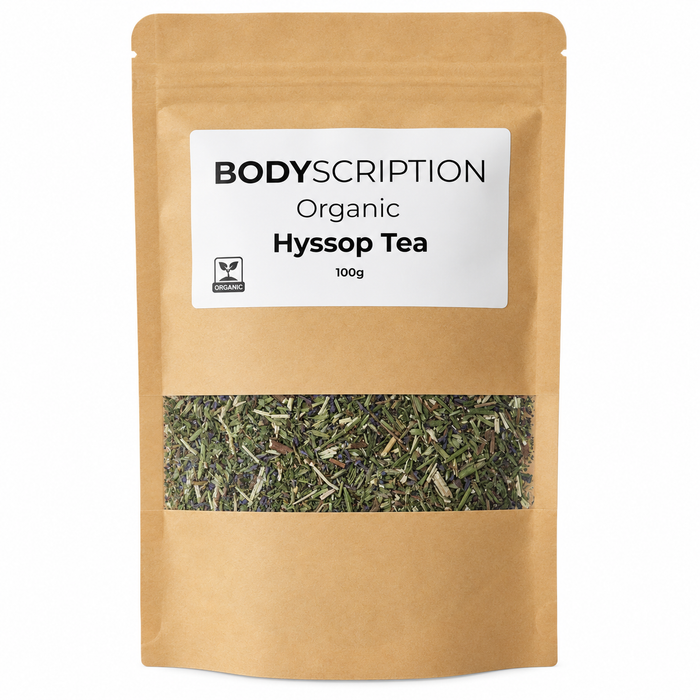
Dried leaves and flowers. Cleanse your lungs. Support your gut. Feel lighter.
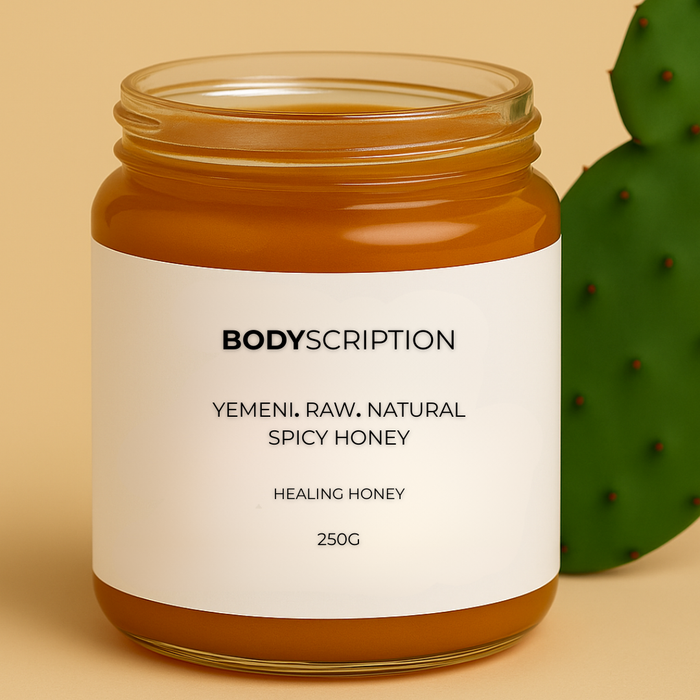
This is not an ordinary honey. The warmth comes from the Ṣāl nectar itself, not from chilli.
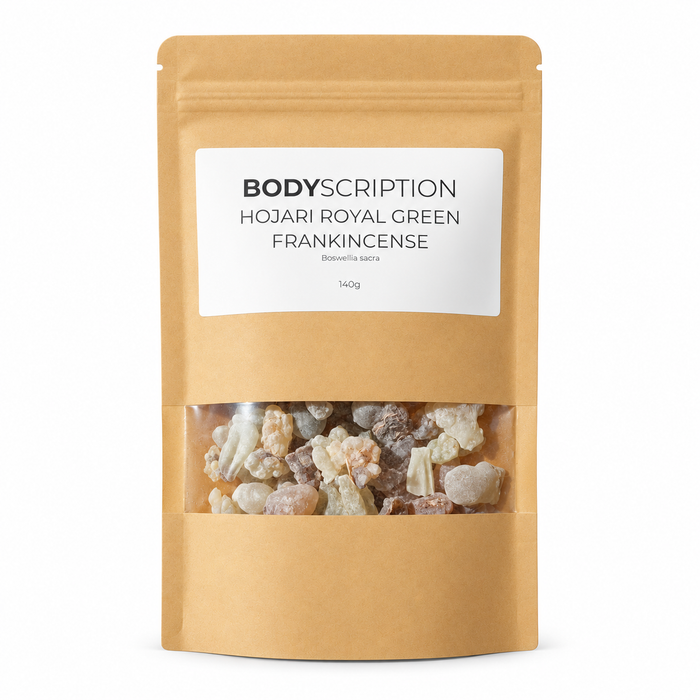
True Royal Green Hojari from the Dhofar mountains, the most sought-after grade of Boswellia sacra.