


01
Pimples & spot treatment
Apply a tiny amount directly to the spot with a cotton bud.
It can be used neat or diluted, depending on your skin. If you are sensitive or notice irritation, dilute it before use.


Tea tree oil comes from Melaleuca alternifolia, a species native to Australia, particularly the coastal regions of northern New South Wales and southern Queensland.
Much of its antibacterial, antifungal and anti inflammatory activity comes from a natural compound called terpinen-4-ol.
Genuine tea tree oil is even covered by an international quality standard, ISO 4730, which sets requirements for the natural compounds that should be present in true Melaleuca alternifolia oil.
That matters because quality can vary enormously. Ours is 100% pure Australian Melaleuca alternifolia, one species, undiluted, with no carrier oils or cheaper oils blended in.
Tea tree works on a pimple from two directions at once. It goes after the bacteria feeding the breakout. It takes down the redness and the swelling around it.
This is what tea tree oil is best known for. It is the use with the most behind it.
The antifungal side is tea tree oil's strongest. It goes on the cracked, itchy skin between the toes, on tinea, on ringworm and on jock itch.
Fungal skin is stubborn. It needs daily application and it needs you to keep going after it looks better.
For thickened, yellowed, crumbling toenails and fingernails. It is worked into the nail and around the edges, where the fungus actually lives.
Nails grow slowly. This one takes months rather than weeks. Consistency is the whole game.
Dandruff is usually a yeast problem, which is precisely what tea tree oil is good at. It brings the flaking down and it stops the itch.
It also calms the inflamed skin underneath, which is the part most anti dandruff shampoos leave behind.
For a scalp that turns greasy a day after washing, or that starts to smell by the end of the week. Tea tree cuts the oil and clears the bacterial build up behind the smell.
Body odour is not sweat. It is the bacteria that break sweat down. Tea tree goes after the bacteria, so there is nothing left to make the smell.
No aluminium, no synthetic fragrance, nothing blocking your pores.
Feet are a bacterial problem and a fungal problem at the same time, which is why most foot sprays only half work. Tea tree handles both.
It goes on the feet and into the shoes.
The bumps that come up after shaving are inflamed, infected follicles. Tea tree keeps the area clean and takes the angry red edge off them.
It works the same way on beard breakouts and on the back of the neck.
For the itch, the redness and the swelling after a mosquito or a midge. It settles the skin down and stops you scratching the bite open.
The original use, the one the First Nations peoples of the north coast put it to. It keeps the skin around a graze clean while it closes.
Around the graze, not in it. Neat essential oil does not go into an open wound.
In a homemade spray it cleans benches, bathrooms, bins, shoes and gym bags, the places where bacteria turn into smell.
In a diffuser it clears a room and leaves that sharp, clean, unmistakable scent.
Tea tree oil is highly concentrated. Always patch test first. Some people tolerate a small amount neat for targeted use, while sensitive skin may need it diluted with a carrier oil.
Apply a tiny amount directly to the spot with a cotton bud.
It can be used neat or diluted, depending on your skin. If you are sensitive or notice irritation, dilute it before use.
Add 3–5 drops to the shampoo in your palm, mix well, then massage into the scalp before rinsing.
Tea tree oil has been clinically studied in shampoo for dandruff, scalp itchiness and greasiness.
Apply a very small amount to clean, dry underarms for its naturally antibacterial and deodorising properties.
It can be used neat or diluted with a carrier oil. Patch test first, especially if your skin is sensitive. Avoid applying immediately after shaving.
For fungal-prone areas such as between the toes, dilute tea tree oil with a carrier oil and apply to clean, dry skin.
Tea tree oil has been studied in human trials for athlete's foot and fungal skin concerns.
Apply a small amount directly around the affected nail and nail edges.
Tea tree oil has also been studied for fungal nail infections, including trials using concentrated topical preparations. Use consistently, as nails take time to grow out.
The main event. Antibacterial, antifungal and anti inflammatory all in the one molecule. ISO 4730, the international standard for genuine tea tree oil, requires at least 30% of it.
Cineole is the harsh component, the part that stings and irritates. The same standard caps it at 15%. Good Australian oil sits well under that. It is the difference between oil that calms your skin and oil that burns it.
This is undiluted essential oil, which is exactly why it is worth buying and exactly why it needs a carrier. A few drops into a teaspoon of jojoba, coconut or almond oil is plenty. The two exceptions are a single pimple and a small amount under the arms.
Tea tree oil oxidises in light and air. Oxidised oil is behind most skin reactions people blame on tea tree. Keep the cap on, keep it out of the sun and use it within a year of opening.
For external use only. Do not swallow. Keep away from children and pets. Always dilute and patch test first.
For external use only. Never swallow tea tree oil. Dilute before applying to the skin, patch test before first use, and stop if irritation occurs. Keep away from the eyes and out of reach of children. Tea tree oil is toxic to pets, particularly cats and dogs.
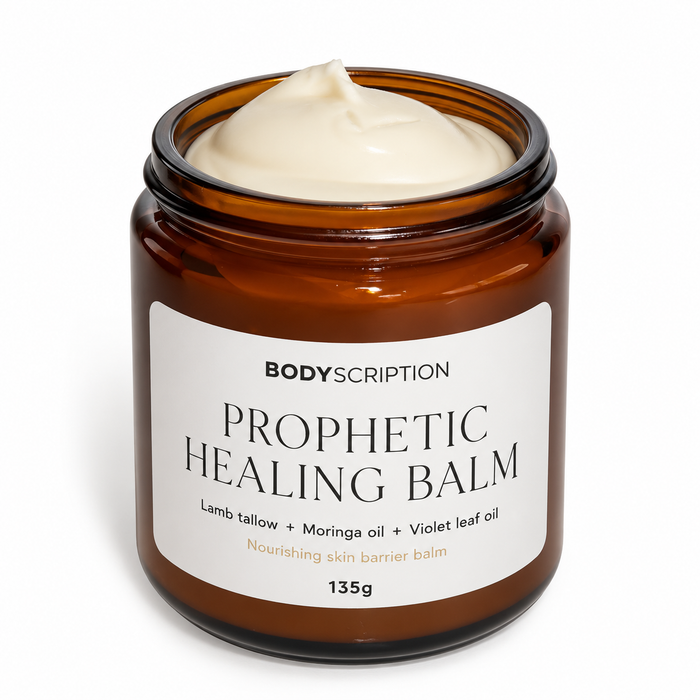
Lamb tallow, moringa and violet leaf infusion. 100% natural, rooted in Sunnah, scientifically backed and halal.
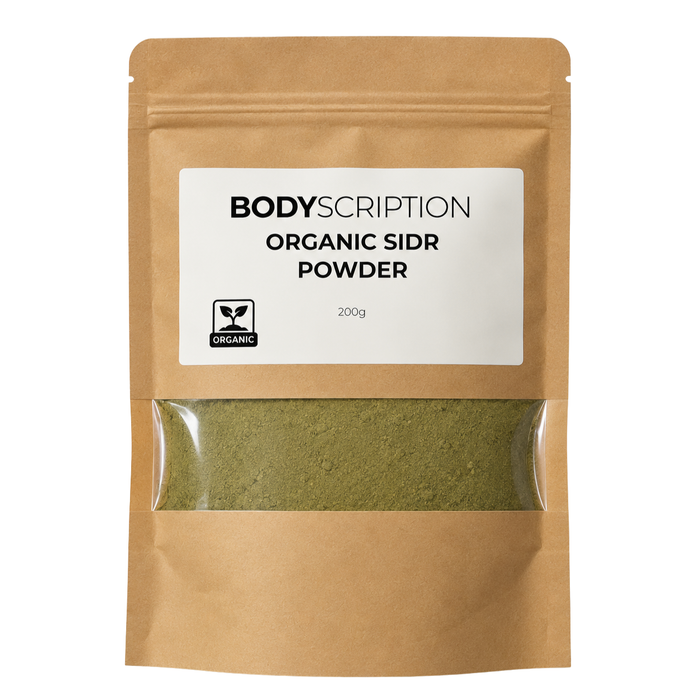
A traditional leaf for a cleaner scalp, fresher skin and a simpler routine.
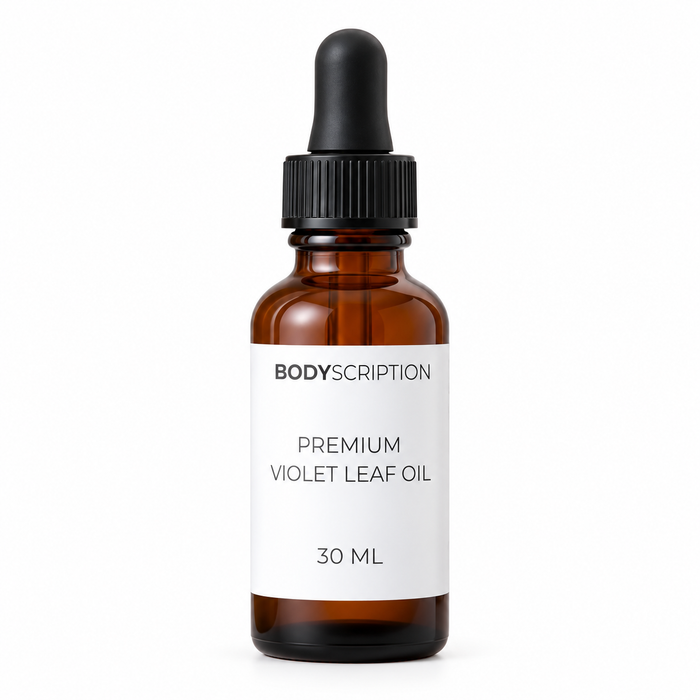
For racing thoughts, hot headaches, aching joints and dry, irritated skin.
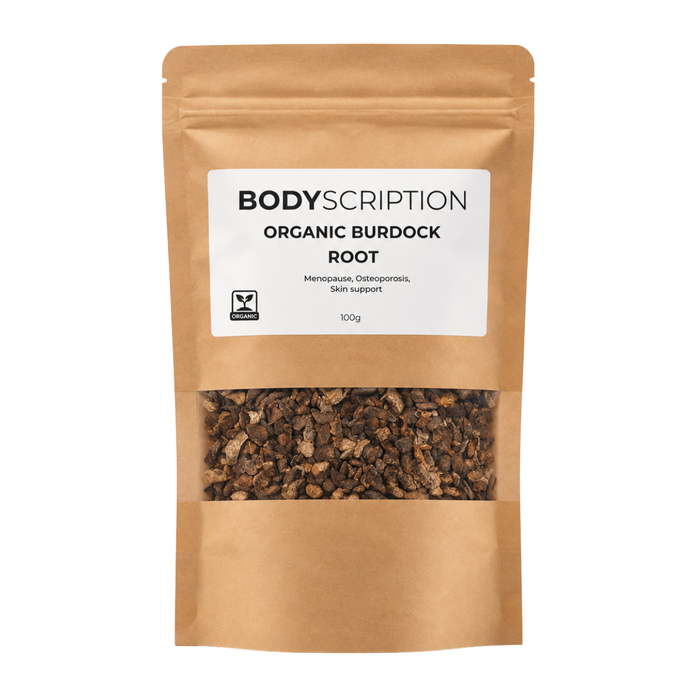
Certified organic greater burdock root, carefully dried. Known as the blood purifier.

Made from the peel, not the seeds, where the fruit stores its highest concentration of compounds.
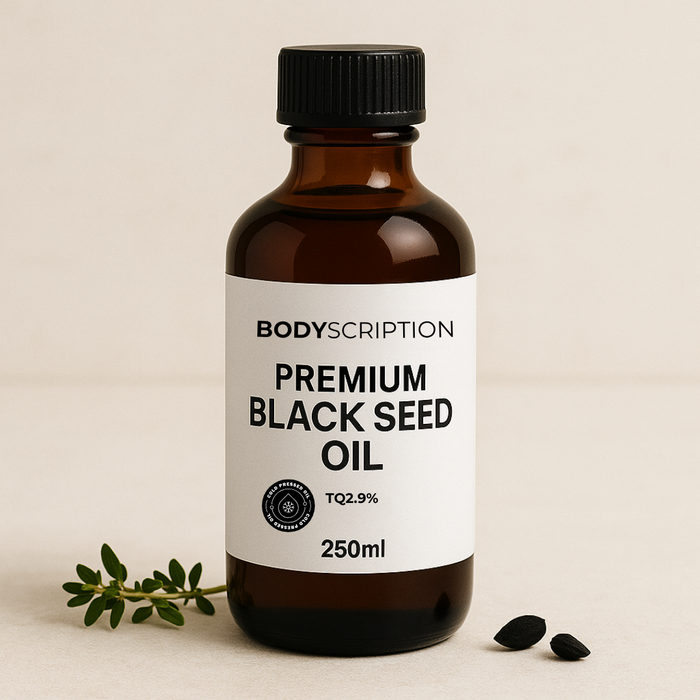
Cold pressed Nigella sativa at nearly three times the thymoquinone of most oils on the market.
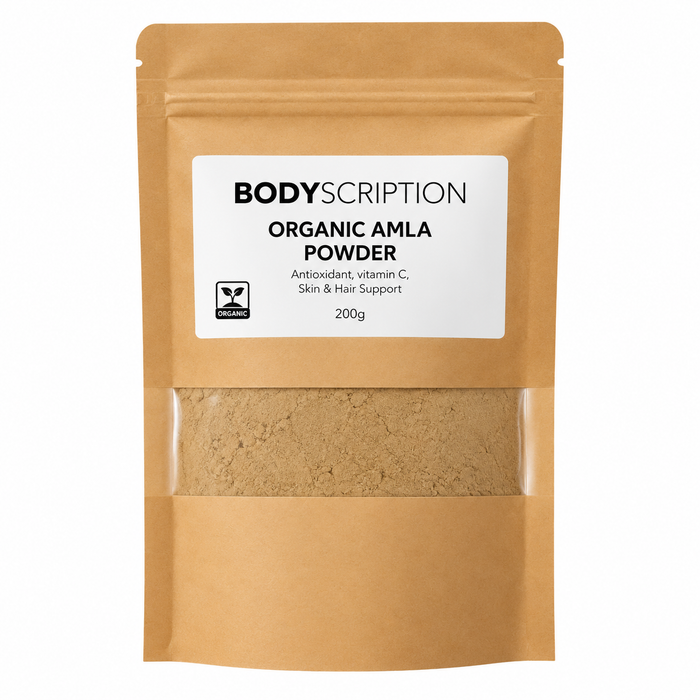
Indian gooseberry, gently dried and finely milled. One of the richest natural sources of vitamin C.