


Organic Pomegranate Peel Tea
Made from the peel, not the seeds, where the fruit stores its highest concentration of compounds.
$39.99View product


Burdock is not only backed by centuries of traditional use. Burdock root tea has also been tested in randomised human trials, including research on inflammatory markers, joint health and recurrence of diverticulitis.
That gives burdock something many traditional herbal roots do not have: a long history of use alongside modern human research.
Burdock is one of the core skin herbs in traditional herbalism, used the same way across Chinese, Japanese, Middle Eastern and European practice. It is taken for eczema prone and psoriasis prone skin, for acne and congested skin, for recurring rashes and boils, as well as for skin that is simply reactive and angry.
It works from the inside rather than on the surface, on the liver, lymph and elimination pathways that drive flare ups when they are overloaded. Its soothing mucilage is also why a strong brew has been used for centuries as a wash or compress applied straight to the skin.
This is the herb the name blood purifier was made for. It works on the liver's detoxification pathways, on lymphatic drainage and flow and on urinary clearance of metabolic waste, which together are what people notice as feeling less puffy, less heavy and less sluggish.
It is where a deep cleansing protocol usually starts. It is also the reason burdock pairs so naturally with red clover and nettle.
This is the best evidenced use burdock has. In adults with knee osteoarthritis, six weeks of burdock root tea brought IL-6 down by 43% and CRP by 10%. It also raised total antioxidant capacity, while the group drinking water saw no change.
Traditional practice has used burdock for joint comfort, flexibility and mobility with age for centuries. The trial gives a reason why.
Burdock is a bitter root. Bitters are classed in herbal medicine as cholagogues: they prompt the gallbladder to release bile. Bile is what emulsifies fat so your body can break it down and absorb it, which is why a heavy or greasy meal sits badly when bile flow is sluggish.
This is the old reason burdock was taken before a big meal and during recovery from illness. It is why herbalists pair it with dandelion root, the other classic bitter.
Two things are working here. Bile is one of the body's own signals to keep the bowel moving, so getting bile flowing gets things moving. The other is inulin. Burdock root is one of the richest food sources of it there is.
Raising inulin intake has been shown in randomised trials to increase how often people go and to soften the stool. It does that without the griping you get from a stimulant laxative. This is fibre working with your gut bacteria, not a purge.
Inulin is a prebiotic, which means you do not digest it. Your gut bacteria ferment it. It selectively feeds bifidobacteria and lactobacilli rather than everything in there.
That shift is what sits behind the steadier appetite, the drop in cravings and the general digestive comfort people report on burdock. It is also why skin and gut tend to improve together on this herb rather than separately.
Burdock is a mild natural diuretic. It increases urine output, which is how retained fluid and metabolic waste actually leave rather than sitting there. Traditionally used for urinary cleansing, water retention and puffiness. This is also a large part of why the skin and detox uses work at all: whatever the liver breaks down still has to get out.
Burdock root can be used on its own, combined with dandelion root, or prepared as a topical wash.
Add 1–2 teaspoons of cut burdock root to 1 cup of water.
Bring to a gentle simmer for 10–15 minutes, then strain and drink.
For everyday use, start with 1 cup daily and increase gradually if desired.
Combine equal parts burdock root and dandelion root.
Add to 1½ cups of water, simmer for 10–15 minutes, then strain and drink warm.
Make a stronger brew using roughly double the usual amount of burdock root and allow it to cool completely.
Use it as a skin wash, rinse or compress over areas that feel irritated, inflamed or troubled. Burdock has a long history of external use for skin complaints and problem skin.
Patch test first if your skin is sensitive. Burdock belongs to the daisy family, so avoid it if you have a known allergy to plants such as ragweed or chamomile.
Avoid or speak to your healthcare professional before use if you are pregnant or breastfeeding, allergic to plants in the daisy family such as ragweed, chrysanthemum or chamomile, taking diuretics or blood thinners, scheduled for surgery, taking medication, or managing a medical condition. Sold as a food, not a medicine.
Made from the peel, not the seeds, where the fruit stores its highest concentration of compounds.
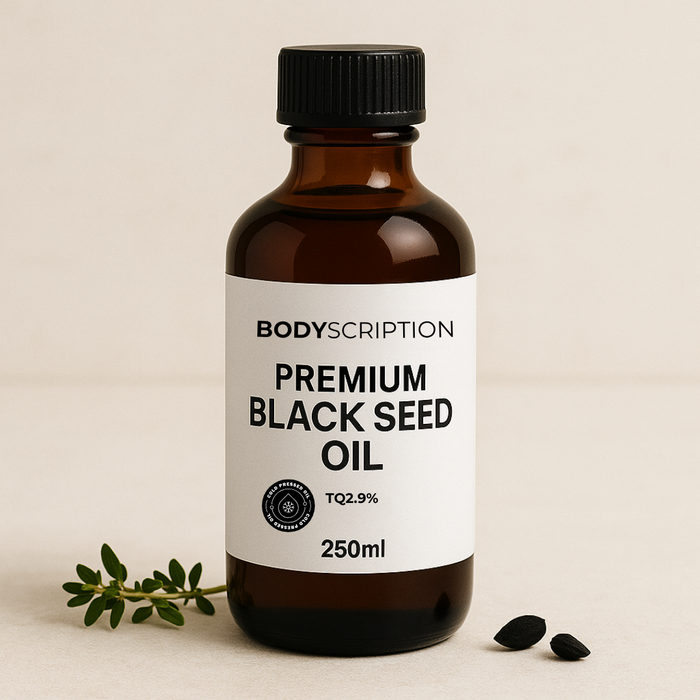
Cold pressed Nigella sativa at nearly three times the thymoquinone of most oils on the market.
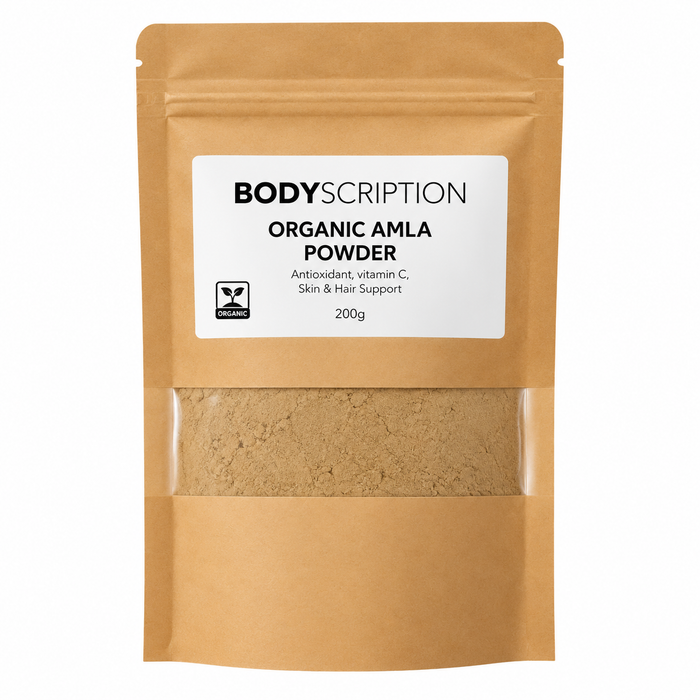
Indian gooseberry, gently dried and finely milled. One of the richest natural sources of vitamin C.
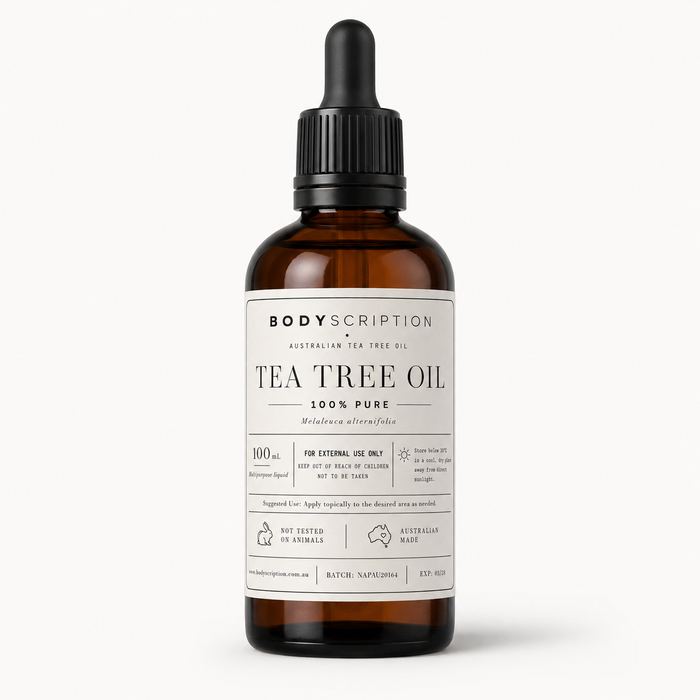
Steam-distilled from Melaleuca alternifolia, grown in the land it belongs to. No fillers, no dilution.
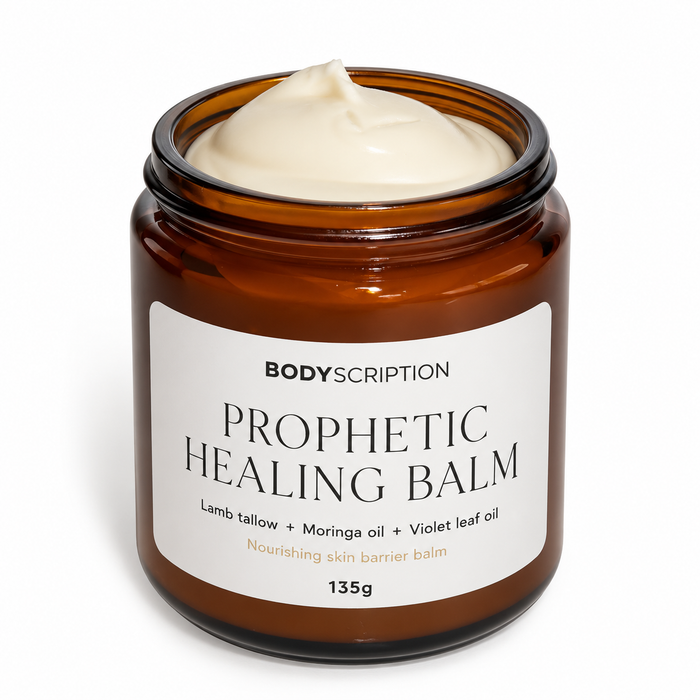
Lamb tallow, moringa and violet leaf infusion. 100% natural, rooted in Sunnah, scientifically backed and halal.
A traditional leaf for a cleaner scalp, fresher skin and a simpler routine.
For racing thoughts, hot headaches, aching joints and dry, irritated skin.